The following article is re- blogged from www.eirigi.org
This is some genuinely inspirational campaigning from socialist republicans in Wicklow.
In the 1970's Seamus Costello led a campaign to ensure access to Wicklow's coast line, confronting private interests that tried to make profit from public land.
It's great to see socialist republicans in Wicklow continuing that proud tradition and a campaign that combines socialist republican's and a section of the organised labour movement is a very positive development.
Mizen Head Anti-Land Grab Campaign Intensifies
In recent weeks the Mizen Head Action Campaign, which is made up of members of éirígí and the Independent Workers Union along with local anglers, walkers and members of the community, have intensified their campaign against the illegal barricade preventing public access to Mizen Head in County Wicklow.
On Sunday July 21, the campaign held a vibrant “Fish In” protest against the European Golf Club’s land grab of a section of the Wicklow shoreline. For over a decade the owners of the Golf Club have fenced off land belonging to the Irish people, denying accesses to Mizen Head. Before protestors arrived at the disputed site, the illegal barrier had been removed by the ‘Wicklow Saw Doctors’, allowing the protestors gain safe access to Mizen Head to carry out the “Fish In”.
Campaign members erected posters at the site highlighting the dispute and the protest took the form of a hotly contested fishing competition which was won by an East Wicklow angler. On Monday July 22, the anti-land grab campaign staged a picket at Wicklow County Council buildings in Wicklow Town. The picket took the form of a peaceful ‘lock-out’ that saw the gates at the entrance of Wicklow County Council buildings chained closed.
The colourful picket received great support from local people passing by. An hour after the ‘lock-out’ began the management of Wicklow County Council and local Gardaí gained access by sheering the large chain and lock that had prevented access to the building. The protestors then moved to the outside foyer of the building to continue to highlight the land grab of Wicklow’s scenic shoreline.
Sean Doyle, a trade unionist from the IWU and a member of éirígí, said, “The matter of the illegal barrier on the Mizen Head was referred to An Bord Pleanála, who found there was an unregistered land strip between the European Golf Club boundary and the shore line. They also found that the golf club owner has no right to erect a barricade or claim land belonging to the people as his own.”
éirígí Wicklow spokesperson Adrian O’Raghallaigh said, “We have brought the Mizen Head campaign to the gates of Wicklow County Council because of their lack of effort in dealing with this case. In 2005 an enforcement notice was issued by Wicklow County Council yet in 2013 the barricade remains in situ.
This is completely unacceptable and the campaign will continue until the right of the people to access Mizen Head is recognized by all.”
For more information on the campaign 'Like' the facebook page:
https://www.facebook.com/pages/Mizen-Head-Action-Campaign/173995486113861
Showing posts with label Seamus Costello. Show all posts
Tuesday, 13 August 2013
Saturday, 10 August 2013
Loyalism and the Connolly Approach
As the British seem intent to let their murder gangs off their leash in an effort to divide the community and distract the working class in the occupied six counties, it is important that socialist republicans maintain a disciplined and principled approach to dealing with the question of Loyalism.
Below we republish the writings of Seamus Costello on the subject.
Within the article, based on methods previously perfected by James Connolly as a trade union leader in Belfast, Costello sets out the template of socialist republican engagement with Loyalism. Although dating from 1975, Costello's comments are of key importance to republicans in the 21st centaury.
Costello's revolutionary strategy stands at odds with the method put forward from some within the nationalist community and the British establishment, that would see republicans bend over backwards and drop all principle in a programme of 'Unionist Outreach'.
We hope this article will be widely discussed today as it was in 1975 and that it's lessons are adopted by this generation of socialist republicans.
Loyalism and the Connolly Approach
Connolly had to face exactly the same predicament. In Belfast prior to 1916, you had people who classified themselves as socialists and who were also interested in ending British rule in Ireland. Their approach to the Protestant working class as on the basis of limited and immediate issues. One of the principal issues which affected both sections of the working class was the question of whether or not they could get gas and water into their houses.
"Connolly was totally in opposition to this approach. He categorized them as gas and water socialists. Today in Belfast we have what we call ring-road socialists. They are exactly the same type of people. They are, in fact, the leadership of the Official republican movement in Belfast.
"We maintain that any co-operation with the Protestant working class must be on the basis of a principled political position. It must be on the basis of explaining fully to the Protestant working class what all our policies are, not just our policy on the ring-road. We must try and politicize them, simultaneously with conducting a political campaign to get rid of Britain.
It will be primarily an educational function, or an educational campaign directed towards Protestants in the hope at least that some significant section of the Protestant working class will understand."
Friday, 19 July 2013
Founding Statement of the Irish Republican Socialist Party
Later that same day Costello presided over the formation of a new republican army, an organisation he hoped to mould as the armed cadre of the working class. This organisation was known firstly be as the National Liberation Front but would soon become known across the world as the Irish National Liberation Army.
Many of the founding members of the IRSM were veteran republicans. Following the 'stickies' slide into counter revolution, whole cumainn resigned on mass to join the new organisation.
Seamus Costello was its driving force. He succeeded in recruiting many of the leading republicans, socialists and trade unionists of the day to its ranks.
The forces of reaction in Ireland soon took note of the emerging IRSP and decided to crush the movement at birth. State repression and counter revolutionary attacks would be unleashed on the new party which stunted its growth, but not its revolutionary message.
Costello himself would be murdered in cold blood by counter revolutionaries in 1977, an event from which the IRSM never really recovered. With the murder of Seamus Costello Ireland lost its greatest revolutionary leader since James Connolly and the struggle for national liberation and socialism was set back for generations.
Much of the founding statement of the IRSP remains as relevant to Irish socialist republicanism today as it was when written almost forty years ago. Within the short statement there are many fundamental truths and a draft guide to action for socialist republicans. Its message should be studied by all genuine Irish revolutionaries today.
For that reason, today we republish the founding statement of the IRSP. We hope it is widely read and studied by modern socialist republicans. We must learn well the lessons of our history so our historic struggle can be carried forward to victory.
IRISH REPUBLICAN SOCIALIST PARTY
Páirtí Poblachtach Sóisialach na hÉireann PRESS STATEMENT: 13.12.'74.
At a meeting held in Dublin on Sunday, 8.12.'74, a decision was made to form a new political party, to be known as THE IRISH REPUBLICAN SOCIALIST PARTY. The inaugural meeting was attended by approximately 80 delegates from Belfast, Armagh, Co. Derry, Derry City, Donegal, Dublin, Wicklow, Cork, Clare, Limerick and Tipperary.
It was unanimously agreed that the objective of the Party would be to "END IMPERIALIST RULE IN IRELAND, and ESTABLISH A 32 COUNTY DEMOCRATIC SOCIALIST REPUBLIC WITH THE WORKING CLASS IN CONTROL OF THE MEANS OF PRODUCTION, DISTRIBUTION AND EXCHANGE".
To this end, it was agreed that the Party would launch a vigorous campaign of political agitation and education, North and South, on the following issues:
SIX COUNTIES
1/ Recognising that British Imperialist interference in Ireland constitutes the most immediate obstacle confronting the Irish People in their struggle for democracy, National Liberation and Socialism, it shall be the policy of the Party to seek the formation of a broad front on the basis of the following demands:
A/ That Britain must immediately renounce all claims to Sovereignty over any part of Ireland and its coastal waters, and should immediately specify an early date for the total withdrawal of her military and political presence from Ireland.
B/ Having specified the date for her total withdrawal from Ireland, Britain must immediately withdraw all troops to barracks, release all internees and sentenced political prisoners, grant a general amnesty for all offences arising from the military campaign against British Forces or through involvement in the Civil Disobedience Campaign, abolish all repressive legislation, grant a Bill of Rights which will allow complete freedom of political action and outlaw all discriminination whether it be on the basis of class, creed, political opinion or sex. Britain must also agree to compensate the Irish People for the exploitation which has already occurred.
C/ It shall be the policy of the IRISH REPUBLICAN SOCIALIST PARTY to seek an active working alliance of all radical forces within the context of the Broad Front in order to ensure the ultimate success of the Irish Working Class in their struggle for Socialism.
D/ It will be an immediate objective of the Party to launch an intensive campaign of opposition to the E.E. membership. We, therefore, intend to play an active part in the E.E.C. referendum in the Six County area and through our support groups in Britain.
E/ Recognising that sectarianism, and the present campaign of sectarian assassinations arises as a direct result of British manipulation of the most reactionary elements of Irish Society, we shall seek to end this campaign on the basis of united action by the Catholic and Protestant working class against British Imperialism in Ireland.
TWENTY SIX COUNTIES
1/ We will seek to have a United Campaign of all democratic forces against repressive legislation in the south, and against the policy of blatant collaboration with British Imperialism, which is now being pursued by the 26 County Administration.
2/ THE IRISH REPUBLICAN SOCIALIST PARTY is totally opposed to the exploitation of our natural resources by multi-national Corporations. It shall therefore be our policy to give active and sustained support to the present campaign for the nationalisation of these resources.
3/ Recognising that the rapidly increasing cost of living and rising unemployment are to a large extent a direct result of our EEC membership, it shall be the policy of the IRISH REPUBLICAN SOCIALIST PARTY to actively support the formation of people's organisations to combat rising prices and unemployment.
ELECTIONS
THE IRISH REPUBLICAN SOCIALIST PARTY is not an abstentionist Party, and will decide its attitude towards the contesting of any particular election, on the basis of a thorough analysis of the conditions prevailing at the time. In keeping with this attitude we have decided, in principle, to contest the forthcoming Convention Elections in the Six County Area.
As the vast majority of those involved in the formation of the IRISH REPUBLICAN SOCIALIST PARTY are people who have recently resigned from Sinn Fein (Gardiner Place), we feel it may be necessary to give a brief outline of the reasons for our resignations. They are as follows:
A/ The refusal of the Sinn Fein Ard Comhairle to implement the democratically decided policies on the National Question as laid down at the 1972 and 1973 Ard Fheiseanna.
B/ The lack of internal democracy within Sinn Fein. This became particularly noticeable during the course of the past year when many dedicated members were purged from the organisation because they dared to question the reformist approach of the Ard Comhairle on many vital questions. This purge culminated in attempts by members of the Ard Comhairle to intimidate delegates to the recent Ard Fheis, when many of them were threatened with expulsion if they did not vote in accordance with the wishes of the leadership.
C/ the decision of the Ard Comhairle to contest the Six County Assembly Elections, when it was perfectly obvious that the elections were clearly designed to re-establish a British controlled puppet Parliament for the Six Counties. In our view, this particular decision was indicative of the reformist and counter revolutionary attitudes which prevail at Ard Comhairle level in Sinn Fein, Gardiner Place.
D/ The unprincipled betrayal of the internees arising from the decision to take seats on local councils in the North. This decision was made despite the fact that the Ard Comhairle had made repeated statements attacking the treachery of the SDLP for taking their seats.
We are of course aware that the vast majority of rank and file members are completely opposed to this decision. We urge the ordinary members of Sinn Fein to refuse to accept this unprincipled attitude on the part of the Ard Comhairle. We call on all Republican Club Councillors to stand by the Internees by upholding the peoples' pledge which they signed before their election.
E/ The general drift towards almost exclusive participation in reformist activity, and the total abandonment of agitationary political action in pursuit of their objectives. Under its present leadership, Sinn Fein has been reduced to a position of almost total irrelevance in the context of the present poltical situation.
ORGANISATION
Since last Sunday we have had enquiries from practically every area in the country regarding the formation of branches. During the period since the Sinn Fein Ard Fheis, at least 14 Cumainn and two Comhairle Ceantair have resigned in bloc and indicated their intention of forming IRISH REPUBLICAN SOCIALIST PARTY branches.
We are at present engaged in an intensive recruiting drive, and will organise a full delegate national conference at the earliest possible date. A permanent National Executive will be elected at the Annual Conference.
In conclusion, the IRISH REPUBLICAN SOCIALIST PARTY extends its support to all peoples struggling for Democracy, National Liberation and Socialism.
In Ireland, we appeal to all of those who are genuinely interested in the establishment of a Socialist Republic to re-examine their present position and give their support to the IRISH REPUBLICAN SOCIALIST PARTY.
Those elected to the Temporary National Executive are as follows:
Sean Flynn (Belfast)
Manuel McIlroy (Belfast)
John McAlea (Belfast)
Charlie Craig (Belfast)
Seamus O'Kane (Co. Derry)
Terry Robson (Derry City)
Joe Sweeney (Derry City)
Bernadette McAliskey (Tyrone)
Johnny White (Donegal)
Seamus Costello (Wicklow)
Theresa Gallagher (Dublin)
Anne Webb (Dublin)
Mick Plunkett (Dublin)
John Lynch (Cork)
Stella Mackowski (Clare)
Joe Quinn (Limerick)
Tony Quinn (Tipperary
Tuesday, 16 July 2013
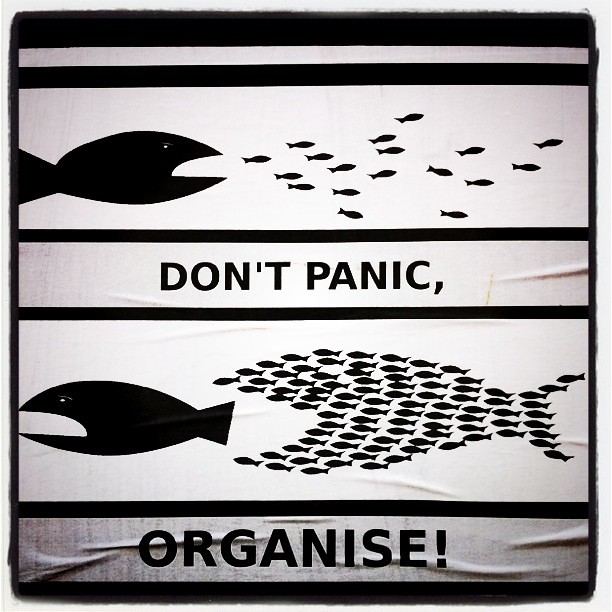
Mobilising the Irish Working Class- Agitate, Educate Organise!
The question on the lips of many people who have attended
the recent anti- austerity protests in Ireland is ‘where are the masses?’ Some who have taken to the streets have been
disappointed by the numbers turning out, comparing Irish protests to those in
Greece or Turkey and have begun to ask ‘why aren’t the Irish people fighting
back?’
Others including some supposedly seasoned left wing
activists, disillusioned by the perceived lack of working class militancy, have
begun to spread the false idea that the people ‘deserve what they get’ for
their lack of revolutionary action. This is a wrong idea that can have
dangerous consequences on the morale of revolutionaries.
The mass boycott of the Household Charge throughout 2012,
although spontaneous in nature, shows the revolutionary potential of the
popular masses once organised. That boycott should serve as an inspiration to
any activist who has become disillusioned it shows that the revolutionary
potential of the working class, although yet unharnessed is ripening in
Ireland.
When we look at the current situation from a Marxist- Leninist
perspective there is clear answer as to why the Irish working class have not
yet mobilised. It’s simple, the Irish working class have not mobilised because
they are not organised. Without the effective mass organisation of the working
class at workplace and community level, its power cannot be successfully
utilised.
The ruling elite in the twenty six counties has spent a considerable
amount of its time, energy and resources ensuring the Irish working class
remain unorganised. Through its championing of so-called ‘social partnerships’
the state has bought off the leaderships of our trade unions, the very people
who are meant to represent the interests of workers. Over 20 years of social
partnership has dramatically strengthened the hand of the ruling elite and
lulled the working class into a dormant and unorganised state.
Political parties from Labour to Sinn Féin have repeatedly
sold out the working class leading to general political apathy in working class
communities. The various factions of Trotskyite groups are the latest opportunists
in Ireland whose only aim is to climb to power on the backs of the working
class only to continue with the system as before.
Successive austerity budgets combined with attacks on wages,
working conditions, social welfare and public services have generated anger,
but when combined with the factors outlined above have given rise to an
unfortunate idea amongst the working class that ‘nothing can be done’ ‘they are
all the same’ or ‘we can’t do anything to change things’. This is a very dangerous
idea, one that lets our exploiters get away with their oppression. A key task
for socialist republicans is to target such apathy and raise the level of class
consciousness in communities across Ireland.
As anyone who has even looked casually at the teachings of
Marxism- Leninism or revolutionary theory knows, change is a constant,
everything is in flux. While it might seem sometimes that nothing can be
changed, a revolutionary knows that change is the only thing that can be guaranteed.
This is a strong argument for confronting apathy amongst the masses and must
become one of our key weapons in the struggle to mobilise the power of the
Irish working class.But how can this be achieved?
The great socialist republican leader, James Connolly had a fool proof three step programme for mobilising the masses, which can be summed up in his well-known phrase ‘AGITATE, EDUCATE, ORGANISE!’. To build genuine links with the masses and to be in the position to mobilise them as a political and revolutionary force, socialist republicans must Connolly’s strategy into practice.
Agitate
To win the support of the popular masses of this country,
socialist republicans must become the engine driving the fight in the everyday
struggles of the people. Genuine socialist republicans have no interest aside
from the freedom of the working class and this is their guiding and motivating
force. Socialist republicans are the most advanced section of the working class
in Ireland and have the revolutionary tradition and experience necessary to
lead the struggle for national liberation.In our community or the workplace socialist republicans must be constantly agitating around the issues that are affecting the working class from wages and conditions to housing healthcare, education the defence of public services and the fight against austerity. At all times socialist republicans must link the local every day struggles of their class to the struggle for national liberation and socialism. Through linking the local struggles to the national and constant agitation we can highlight the contradictions and limits of the current system to the masses.
By constant daily agitation on the issues that concern the working class, we can win the support of the masses to our vision of a free independent socialist republic in Ireland. Through agitation we can show the masses that ‘through socialism alone can the salvation of Ireland come’.
Educate
Mass education is an important tool in the arsenal of the
socialist republican. Through education we can show the working class who
really holds the power in this world, teach them their true strength, confront
political apathy and aim to make the masses aware of their historical role in
the coming revolution.
It is the duty of every socialist republican to carry out
daily efforts at mass education and revolutionary propaganda. Such propaganda
should highlight the failings of the joint systems of capitalism and
imperialism and explain the merits of socialism to the lives of the masses.Leaflets, posters, newspapers the internet and social media can all become revolutionary tools in the hands of socialist republicans. Door to door work, explaining the republican position in working class communities is of the utmost importance. A key task for socialist republicans is to put the words of the great republican Thomas Davis into practice- ‘educate that you may be free’.
Organise
The class conscience of the masses can be raised through a combination of constant agitation and education. Now it is important to get the working class organised. The fight for a socialist republic will have to be organised on every road in every community in Ireland. It is only through the popular involvement and active support of a broad section of the masses that the struggle for national liberation can be successful in Ireland. Socialist republicans must position themselves to be able to organise the popular masses into a mass movement for socialism in Ireland. Such a movement will involve residents and community groups, cultural organisations, political parties, revolutionary trade unions, unemployment and campaign groups all under the democratic leadership of a vanguard socialist republican party.
Through such a revolutionary movement, with the active
support of working class communities, British imperialism and domestic
capitalism can be successfully challenged and the long struggle for national
liberation and socialism in Ireland can be victorious.
Seamus Costello proved in modern times that Connolly’s three
step approach to mobilising the working class can be utilised with awesome
success. By putting the ‘Agitate, Educate, Organise’ strategy into practice,
Costello built a strong republican base in county Wicklow and won a relatively significant
amount people to the socialist republican vision.
So what steps might
socialist republicans take to implement the ‘Agitate Educate Organise Strategy’
today?
1.
First and foremost socialist republicans need to
organise themselves into a vanguard party. The vanguard is the most advanced
section of the working class, the section that understands its historic task
and the force that must guide the revolution to victory. Socialist Republicans
are the natural vanguard in Ireland and already have genuine organic links with
the masses.
Of the parties in existence today, éirígí
would seem to be the most likely to become a revolutionary vanguard. éirígí carries
out good, constant, almost daily work
attempting to implement the ‘Agitate, Educate, Organise’ strategy although they
are a young party and have yet to gain a foothold across much of the country.
For éirígí to become the vanguard needed by the Irish working class their will
need to be a realignment of socialist republican and progressive forces behind
the party, and although in its early stages there is evidence to suggest this
is a distinct possibility. éirígí represents the most important development in
the hope to build a genuine revolutionary movement in this generation.
2.
As Connolly and Costello showed us, Socialist
Republicans must set about organising strong bases for the revolutionary
movement. Their task is to win the
support of the masses to the socialist republic through championing the
everyday struggles of the people in the community and the workplace. Daily agitation
and educational work must be carried out by socialist republican cadres across
Ireland.
3.
Socialist republicans must become involved in
the mass organisations of the people. Where the trade unions have been
corrupted beyond repair new revolutionary and militant trade unions must be
formed. Taking account of the conditions in Ireland these trade unions must be
active in both the workplace and in communities. Community trade unionism will be a key factor
in mobilising the power of the Irish Working class.
Socialist republicans must also be active
in other mass organisations such as single issue campaign groups and cultural
organisations, constantly putting forward the republican message and being the
most militant fighters in the everyday struggles of the people.
4.
Alternative socialist republican media
highlighting the struggles of the people and explaining the republican analysis
must be given a priority. Such work is of the utmost importance to combat the
strangle hold the corporate media currently has on the Irish working class.
Newspapers, blogs, websites and social media must all be utilised to take the
republican message directly to the masses.
5.
The most important step that socialist
republicans can take is to begin daily agtitation, educational and
organisational work in the workplace and the community. Through such work we
can combat political apathy and show the masses that change is not just a
genuine possibility but an inevitability. As the most militant and best
organised fighters for social change, socialist republicans can win the
support, trust and active involvement of the working class. It is only through consistent
organisational work at a local and national level, building a mass movement for
socialism up from the ground that the Irish working class can be genuinely
mobilised.
Implementation of the above five steps would greatly strengthen
the revolutionary movement in Ireland. Only
through the genuine combination of the class and national struggle can the
cause of national liberation and socialism in Ireland be successful.
Monday, 15 July 2013
Seamus Costello and The Anti- Imperialist Broad Front
In many countries fighting for national liberation, the revolutionary forces are coordinated by a 'broad front'. Throughout history, coalition's of anti- imperialist groups have come together to wage a revolutionary class war that seeks to end the exploitation of the working class and establish socialism.
James Connolly understood the importance of such broad fronts for confronting imperialism. For the class struggle to be successful, the revolution must have the support of as wide a section of the masses as possible. It was for this reason that Connolly and the Irish Citizen's Army formed a broad anti- imperialist front in 1916, joining with the Irish Volunteers and Irish Republican Brotherhood. Together they would confront British imperialism in Ireland and proclaim a sovereign independent Republic.
At the triumph of the counter revolution in 1923, there was no credible force pushing for an anti imperialist front that would continue the fight for national liberation and socialism in Ireland. Republicanism suffered a series of damaging splits that divorced the masses from the revolution.
It wasn't until the 1930's and the rise of the Republican Congress, that the idea of a new anti- Imperialist broad front became a distinct possibility in Ireland. The Republican Congress brought together republicans, socialists, communists and trade unionists and brought a section of the revolutionary movement in Ireland back to the every day struggles of the people.
The Republican Congress cut through the religious sectarianism and anti- communist hysteria of the time, to promote for the first time since Connolly, a genuine socialist republicanism in Ireland. Such a movement had the potential to unite all religions and revolutionary forces in the struggle for national liberation.
Unfortunately, worker's in the Ireland of the 1930's had not reached the level of class consciences that was required. The population failed to understand that the policies the Republican Congress were advocating would mean and end to exploitation in Ireland and a genuine freedom for her citizens.
Faced with condemnation from pulpits across the 32 counties, many of the driving figures in the Republican Congress would fight and die bravely on the battlefields of Spain, in defence of the Spanish Republic against the fascist hordes. The cause of national liberation and socialism in Ireland would have to wait for another generation.
In 1962, The IRA concluded that 'Operation Harvest' would not be the battle that would liberate Ireland. Despite heroic resistance from IRA Volunteer's against the on-going crime of British Imperialism, republicans decided it was time to dump arms and wait to fight another day.
In a statement ordering Volunteers to dump arms the IRA said ' Foremost among the factors motivating this course of action has been the attitude of the general public whose minds have been deliberately distracted from the supreme issue facing the Irish people - the unity and freedom of Ireland. The Irish resistance movement renews its pledge of eternal hostility to the British Forces of Occupation in Ireland. It calls on the Irish people for increased support and looks forward with confidence – in co-operation with the other branches of the Republican Movement - to a period of consolidation, expansion and preparation for the final and victorious phase of the struggle for the full freedom of Ireland.'
The IRA realised that it's failure to win the popular support and active involvement of a significant section of the Irish population, meant that it's campaign could not be a success. This had a deep impact on Volunteers who began to realise that clandestine and militarist activities alone would not win the support of the Irish people. These volunteers decided that the Republican Movement must win the support of the masses through active involvement in the everyday struggles of the people.
One such volunteer was Seamus Costello. A committed disciple of Connolly, Costello would spend the rest of his life trying to build a credible and effective republican organisation, that would combine the class and national struggle and win the popular support and active involvement in the fight for national liberation and socialism in Ireland.
Costello was one of the main architect's in the shifting the republican movement to the left throughout the 1960's and always lead from the front. Initially siding with the 'Stickies' in the 1969/1970 split, when it became clear that that organisation was sliding into counter revolution, Costello established a new socialist republican vehicle. In honour of James Connolly the group was called the Irish Republican Socialist Party.
Costello intended the new party to become the engine of a re-organised republican struggle. This he believed would be a party that the Irish working class could call their own. In the early day's of the IRSP, Costello won committed republican soldiers, socialists and trade unionists to it's ranks.
At the same time as be active in the 'practice of revolution in Ireland' Costello was also conscience of the need for revolutionary theory and was always looking for opportunities to win as broad a section of the masses as possible to the struggle for national liberation in Ireland.
Like Connolly in 1916, Costello believed that all Irish anti- imperialist forces should come together to confront British Imperialism and Capitalism. This he believed could create a genuine opportunity to win the support and active involvement of a greater section of the Irish people in the fight for freedom then the IRSP or republicans could hope to mobilise alone.
In 1977, to explore options of doing just that Costello drafted a policy paper which has become known as the 'Broad Front' document. Endorsed by the Ard Comhairle of the IRSP, Costello submitted this document to the 1977 'Broad Front Talks' which brought together a number of Irish anti- imperialist groups to discuss the possibility of common ground being found.
Although the talks ended unsuccessfully, socialist republican's today should study Costello's 'Broad Front' document and taking account of the conditions in Ireland today, discuss whether such an approach could be of benefit to the struggle for national liberation and socialism in Ireland.
Is a Broad Front possible or even desirable? What Anti- Imperialist groups if any, should socialist republicans seek to find common ground and work with today?
Revolutionary theory has an important part to play in the struggle for national liberation and socialism in Ireland today. It is for that reason we are republishing here Seamus Costello's Broad Front document in the hopes that socialist republicans will study its merits and arm themselves with any benefits within it that could strengthen our struggle.
James Connolly understood the importance of such broad fronts for confronting imperialism. For the class struggle to be successful, the revolution must have the support of as wide a section of the masses as possible. It was for this reason that Connolly and the Irish Citizen's Army formed a broad anti- imperialist front in 1916, joining with the Irish Volunteers and Irish Republican Brotherhood. Together they would confront British imperialism in Ireland and proclaim a sovereign independent Republic.
At the triumph of the counter revolution in 1923, there was no credible force pushing for an anti imperialist front that would continue the fight for national liberation and socialism in Ireland. Republicanism suffered a series of damaging splits that divorced the masses from the revolution.
It wasn't until the 1930's and the rise of the Republican Congress, that the idea of a new anti- Imperialist broad front became a distinct possibility in Ireland. The Republican Congress brought together republicans, socialists, communists and trade unionists and brought a section of the revolutionary movement in Ireland back to the every day struggles of the people.
The Republican Congress cut through the religious sectarianism and anti- communist hysteria of the time, to promote for the first time since Connolly, a genuine socialist republicanism in Ireland. Such a movement had the potential to unite all religions and revolutionary forces in the struggle for national liberation.
Unfortunately, worker's in the Ireland of the 1930's had not reached the level of class consciences that was required. The population failed to understand that the policies the Republican Congress were advocating would mean and end to exploitation in Ireland and a genuine freedom for her citizens.
Faced with condemnation from pulpits across the 32 counties, many of the driving figures in the Republican Congress would fight and die bravely on the battlefields of Spain, in defence of the Spanish Republic against the fascist hordes. The cause of national liberation and socialism in Ireland would have to wait for another generation.
In 1962, The IRA concluded that 'Operation Harvest' would not be the battle that would liberate Ireland. Despite heroic resistance from IRA Volunteer's against the on-going crime of British Imperialism, republicans decided it was time to dump arms and wait to fight another day.
In a statement ordering Volunteers to dump arms the IRA said ' Foremost among the factors motivating this course of action has been the attitude of the general public whose minds have been deliberately distracted from the supreme issue facing the Irish people - the unity and freedom of Ireland. The Irish resistance movement renews its pledge of eternal hostility to the British Forces of Occupation in Ireland. It calls on the Irish people for increased support and looks forward with confidence – in co-operation with the other branches of the Republican Movement - to a period of consolidation, expansion and preparation for the final and victorious phase of the struggle for the full freedom of Ireland.'
The IRA realised that it's failure to win the popular support and active involvement of a significant section of the Irish population, meant that it's campaign could not be a success. This had a deep impact on Volunteers who began to realise that clandestine and militarist activities alone would not win the support of the Irish people. These volunteers decided that the Republican Movement must win the support of the masses through active involvement in the everyday struggles of the people.
One such volunteer was Seamus Costello. A committed disciple of Connolly, Costello would spend the rest of his life trying to build a credible and effective republican organisation, that would combine the class and national struggle and win the popular support and active involvement in the fight for national liberation and socialism in Ireland.
Costello was one of the main architect's in the shifting the republican movement to the left throughout the 1960's and always lead from the front. Initially siding with the 'Stickies' in the 1969/1970 split, when it became clear that that organisation was sliding into counter revolution, Costello established a new socialist republican vehicle. In honour of James Connolly the group was called the Irish Republican Socialist Party.
Costello intended the new party to become the engine of a re-organised republican struggle. This he believed would be a party that the Irish working class could call their own. In the early day's of the IRSP, Costello won committed republican soldiers, socialists and trade unionists to it's ranks.
At the same time as be active in the 'practice of revolution in Ireland' Costello was also conscience of the need for revolutionary theory and was always looking for opportunities to win as broad a section of the masses as possible to the struggle for national liberation in Ireland.
Like Connolly in 1916, Costello believed that all Irish anti- imperialist forces should come together to confront British Imperialism and Capitalism. This he believed could create a genuine opportunity to win the support and active involvement of a greater section of the Irish people in the fight for freedom then the IRSP or republicans could hope to mobilise alone.
In 1977, to explore options of doing just that Costello drafted a policy paper which has become known as the 'Broad Front' document. Endorsed by the Ard Comhairle of the IRSP, Costello submitted this document to the 1977 'Broad Front Talks' which brought together a number of Irish anti- imperialist groups to discuss the possibility of common ground being found.
Although the talks ended unsuccessfully, socialist republican's today should study Costello's 'Broad Front' document and taking account of the conditions in Ireland today, discuss whether such an approach could be of benefit to the struggle for national liberation and socialism in Ireland.
Is a Broad Front possible or even desirable? What Anti- Imperialist groups if any, should socialist republicans seek to find common ground and work with today?
Revolutionary theory has an important part to play in the struggle for national liberation and socialism in Ireland today. It is for that reason we are republishing here Seamus Costello's Broad Front document in the hopes that socialist republicans will study its merits and arm themselves with any benefits within it that could strengthen our struggle.
The Broad Front- Seamus Costello.
The IRSP fully endorse the sentiments, expressed in the basic discussion document regarding the seriousness of the present political crisis in Ireland and fully support the call for the maximum degree of anti-imperialist unity. We feel that genuine anti-imperialist unity can be achieved and that the basic discussion document lays the basis for such unity provided those present at this conference can agree that the document needs clarification and amendment on a number of important points.
As a socialist party, our ultimate political objective is the creation of a unified 32 county Democratic Socialist Republic within which the Irish working class will control the wealth and resources of the nation. This objective can only be achieved through the efforts of a unified and politically conscious Irish working class. The fact that a unified and politically conscious Irish working class does not exist is a direct consequence of the creation of two partitioned states in Ireland, and of the continuing imperialist interference in both parts of the country. The problems arising from this lack of working class unity are painfully obvious. The working class people of the South have been skillfully divided by the allies of British imperialism since the establishment of the 26-county state. For 50 years the Southern working class have been conned into supporting political parties who held out the illusion of radical solutions to both the national question and the class struggle, while in reality they used the working class as a power base for their continued betrayal of both struggles. In the North the Protestant working class were led to believe that the only way in which they could preserve the marginal supremacy which they held over their Catholic counterparts in jobs and housing was through supporting corrupt Unionist politicians and through them the Union with Britain. Their genuine and well founded fears regarding the preservation of their religious and civil liberties in the context of a united and clerical dominated Ireland were also exploited by the same corrupt politicians. At the same time the Catholic working class were conned into believing that their salvation lay in supporting green tory politicians who, while hypocritically advocating the reunification of Ireland, as a guarantee of their ultimate salvation, completely submerged themselves in corrupt Unionist politics in exchange for favours for the class they really represented, the Northern Catholic middle class. As history has shown, the working class, North and South, Protestant and Catholic, have been victims of the so-called solutions to the 'Irish Question' imposed by Britain and her subservient native parliaments. It is still Britain's objective to find and impost a political solution which will guarantee the continued protection of Britain's economic and strategic interests in both parts of Ireland. Britain is also acting as the local protector of the interests of other imperial powers in Ireland. Some of the EEC countries as well as America and Canada have powerful vested interest in supporting a British imposed 'solution' in Ireland. Britain also has to consider the possible effects on internal British politics of the emergence of a united and independent state in Ireland. In our view, if an independent Ireland is to be viable in economic terms, and if it is to provide a reasonable standard of living for the majority of our people, it can only be done through a radical change in the ownership of wealth and resources. In these circumstances Britain and the EEC countries would have every reason to worry about the effects on working class opinion in their own countries. Finally of course Britain's strategic interests must also be protected through the imposition of a 'solution' which will ensure that Ireland continues its present policy of pro-imperialist 'neutrality.' Every British imposed solution including the original partition of the country, the Northern Ireland Assembly...the Convention and direct rule, has been designed to protect these economic and strategic interests. The present policy of the Ulsterisation of the conflict is also clearly designed to perpetuate the division of the country, and the sectarian divisions of the Northern working class. The native capitalist class, acting through the political parties which represent their interests in both parts of Ireland have played a fundamental role in supporting British imperialist interests in Ireland. They have done so because they have now accommodated themselves to the role of overseers for the British and other imperialist economic interests. They have clearly thrown their weight behind the various solutions put forward by British imperialism over the past eight years, and will continue to do so in order to ensure that the one solution which would end their role as the native agents of foreign imperial interests does not emerge. As a party we therefore recognize the absolute necessity of securing a constitutional solution to the present crisis which will allow the Irish working class the freedom to pursue their interests as a class in the context of the development of normal class politics. In our view the first step in securing a constitutional solution which meets this requirement must be for Britain to concede the right of the Irish people to exercise total sovereignty over their own affairs. This objective can only be achieved through the creation of a unified struggle on the part of all anti-imperialist organizations. We would therefore support the formation of an Irish anti-imperialist Front composed of delegates from affiliated organizations who support the agreed political programme of the Front. The primary objective of the Front would be to mobilize the maximum degree of support for its declared objectives throughout Ireland. The Front should have sufficient support and assistance from its affiliated organizations to enable it to open a head office with a full time staff. We propose the following political demands as the basis on which an Irish anti-imperialist Front should organise: - That Britain must renounce all claims to sovereignty over any part of Ireland or its coastal waters.
- That Britain must immediately disband and disarm the UDR, RUC, and RUC Reserve and withdraw all troops from Ireland.
- That the British and 26 County governments must immediately release all political prisoners and grant a general amnesty for all offenses arising from the current conflict.
- That Britain must agree to compensate all who have suffered as a result of imperialist violence and exploitation in Ireland.
- Recognizing that no country can be free and independent while it permits imperialist domination of its economic life, the Irish anti-imperialist Front will oppose all forms of imperialist control over our wealth and resources.
- That the Irish anti-imperialist Front rejects a federal solution and the continued existence of two separate states in the 6 and 26 counties as a denial of the right of the Irish people to sovereignty and recognizes the only alternative as being the creation of a 32 County Democratic Republic with a secular constitution.
- That the Irish anti-imperialist Front demands the convening of an all Ireland Constitutional Conference representative of all shades of political opinion in Ireland for the purpose of discussing a democratic and secular Constitution which would become effective immediately following a total British military and political withdrawal from Ireland.
Friday, 7 September 2012
Seamus Costello Oration at Bodenstown 1966
In the 1960's the republican movement officially adopted a socialist republican outlook. This came to be, following the period of re-organisation in the aftermath of the 'Border Campaign' [1956-1962].
By embracing socialist republicanism, the movement aimed to win popular support for the strugle for national liberation in Ireland by becoming involved in the everyday struggles of the people of Ireland. One of the leading architects of re-establishing socialist republicanism as the central plank of the republican movement was a young volunteer from Bray, Co. Wicklow named Seamus Costello.
Costello was a veteran of the Border Campaign, during which despite his youth his daring military exploits had earned him the nickname 'the boy general'. Costello was a disiple of Connolly and understood that the class and the national struggle were the same fight.
It was no suprisie then, that it was Seamus Costello who was chosen to announce the republican movments offical adoption of socialist republicanism. In 1966, in an inspiring speech made at the grave of the father of Irish republicanism, Theobold Wolfetone at Bodenstown Co. Kildare, Costello set out the new policy of the movement and laid out the position of Irish Socialist Republicans.
It is a position that socialist republicans still adhere to today and is important reading for anyone who wants to understand the political programme of socialist republicans.
We are proud to republish this important doccument on this site:
Costello was a veteran of the Border Campaign, during which despite his youth his daring military exploits had earned him the nickname 'the boy general'. Costello was a disiple of Connolly and understood that the class and the national struggle were the same fight.
It was no suprisie then, that it was Seamus Costello who was chosen to announce the republican movments offical adoption of socialist republicanism. In 1966, in an inspiring speech made at the grave of the father of Irish republicanism, Theobold Wolfetone at Bodenstown Co. Kildare, Costello set out the new policy of the movement and laid out the position of Irish Socialist Republicans.
It is a position that socialist republicans still adhere to today and is important reading for anyone who wants to understand the political programme of socialist republicans.
We are proud to republish this important doccument on this site:
Oration at Bodenstown
Text of oration delivered by Seamus Costello at the Wolfe Tone commemoration at Bodenstown, 1966.
We have assembled here today to pay our respects to the memory of Theobald Wolfe Tone, the father of Irish republicanism. If we, the republicans of 1966, are to pay a fitting tribute to Tone, it is essential that we examine in depth the ideals for which he fought and died. He believed that the Irish people "had but one common interest and one common enemy; that the depression and slavery of Ireland was produced and perpetrated by the divisions existing between them, and that, consequently, to assert the independence of their country, and their own individual liberties, it was necessary to forget all former feuds to consolidate the entire strength of the whole nation, and to form for the future but one people."
His attitude towards the so-called 'Irish parliament' of the day is also worthy of attention. He maintained that the parliament was a totally ineffective body, that it had changed nothing in Ireland, that the social and political order remained the same, and that, as before, the real power lay with the British Government. He realized that until such time as the Irish people united and demanded their just rights that the wealth of this country would either be controlled directly by Britain, or be syphoned off with the willing connivance of a subservient Irish parliament.
Having seen the problems that existed at the time, Tone in conjunction with the other leaders of the revolutionary movement decided that the first logical step towards a solution was to "break the connection with England, the never failing source of all our political and economic evils."
You may well ask why we of the republican movement, 168 years after the death of Tone, find it necessary to advocate the same course of action that he advocated. The answer is simple. We find it necessary to advocate the same course of action because of the fact that the Irish people still do not control their own affairs, and because their economic and political independence is considered a fit subject for barter or sale by our two subservient puppet parliaments. If the Irish people have any doubt about the truth of this statement and want proof of what I say, they have only to take a close look at the situation that exists today in each part of our partitioned land.
In the North, the destinies of one and a half million of our countrymen are controlled by a puppet regime whose existence for some 45 years has depended on the support of British armed forces. This regime has found to its apparent delight that one of the simplest ways of ensuring its continued existence is by the furtherance of bigotry and sectarianism. Ample evidence of this policy can be found in the recent antics of a certain reverend agent provocateur.
These then are the means by which the British imperialists intend to maintain the people of the North in perpetual slavery. These are also the means by which the working classes are divided against their own material welfare. The pro-British capitalist class who control the economy of the North know very well that, when the people reject those who foster sectarianism, their next step will be to demand a just share of the wealth which they create. These are the real reasons why one section of the community are led to believe that it is in their interest to discriminate against another section. Never are they told that the standard of living which they enjoy, at the expense of their victimized neighbors, is theirs by right - rather are they tricked into believing that these natural rights are a reward for their support of the regime. These tactics serve to ensure that a large section of the population of the North remain loyal to the regime and at the same time do not insist on having a bigger share in the wealth.
In the 26 counties the most that can be said of the position is that it contains one evil less religious discrimination is absent. The political and economic subjection of this part of Ireland to Britain is no less complete than that of the North.
However, British control over the destinies of the people of the 26 counties is not as obvious. This is due in the main to the fact that since 1921 they have had the co-operation of successive quisling parliaments in order to ensure that their interests here are fully protected.
The effects of this economic subjection are obvious in every sphere of life in Ireland at the present time. We of the republican movement have no need to tell the Irish people of the sorry mess which has been made of the economy.
The politicians are telling us every day. They tell us that this position arises as a result of the workers insisting on having a better standard of living. Never are we told that the profits which accrue from our labours are invested abroad by the native and foreign capitalists who control our resources. We are constantly told that we must work harder for the same wages despite the fact that we have to live with an ever increasing cost of living and an ever increasing burden of taxation. Up to now we have been 'advised' that it is wrong for workers to withhold labour in the struggle to wrest a decent wage from those employers whose only role in life seems to be the exploitation of workers. The situation in this regard has now changed radically, with the introduction of coercive anti-worker legislation. We now find that Mr. Lemass, in his eagerness to please his imperial masters, is prepared to use against farmers and workers the same type of repression which was previously reserved for republicans. It now seems inevitable that the republicans in Mountjoy prison will soon find themselves joined by farmers and trade unionists.
We republicans must not be content to criticize those who misgovern both parts of our country. If we are to regard ourselves as true followers of Tone, we must provide the Irish people with an alternative. It must be a realistic and practical alternative. Our target must be the achievement of the ideals set out in the Proclamation of 1916 - the right of the people of Ireland to the ownership of Ireland, religious and civil liberty, equal rights and equal opportunities for all our citizens.
This in effect means that we must aim for the ownership of our resources by the people, so that these resources will be developed in the best interests of the people as a whole. Some of you may feel that these aims are impossible to achieve until such time as we have an independent all-Ireland government. It is certainly true that some of these aims will not reach fruition until such time as we have an all-Ireland parliament. However, in the meantime, you as republicans have an extremely important part to play in the furtherance of this policy.
It is your duty to spearhead the organization of a virile co-operative movement among the farming community. It is also your duty to use your influence as trade unionists to organise a militant trade union movement with a national consciousness. In short, it is your duty to become active, hard working members of each and every organization that is working for the welfare of all the people and towards the reunification of the country.
You should use every possible opportunity to acquaint the people with our policies on land, industry and finance. We believe that there should be a limit to the amount of land owned by any single individual. We also believe that the large estates of absentee landlords should be acquired by compulsory acquisition and worked on a co-operative basis with the financial and technical assistance of the State.
In the field of industry, our policy is to nationalize the key industries with the eventual aim of co-operative ownership by the workers. The capital necessary to carry out this programme can be made available without recourse to extensive taxation by the nationalization of all banks, insurance, loan and investment companies whose present policy is the re-investment of our hard earned money in foreign fields.
This in short is our policy. This is our definition of freedom. It was Tone's definition, Lalor's definition, Mitchel's definition, and the stated aim of Pearse and Connolly. We can expect the same reaction to the implementation of these aims from the forces of exploitation, whether native or foreign sponsored, as the originators received in '98, '48, '67 and 1916. Therefore, to imagine that we can establish a republic solely by constitutional means is utter folly. The lesson of history shows that in the final analysis the robber baron must be dis-established by the some methods that he used to enrich himself and retain his ill-gotten gains, namely, force of arms. To this end we must organise, train, and maintain a disciplined armed force which will always be available to strike at the opportune moment.
Wednesday, 8 August 2012
Onwards to Victory- Build the Socialist Repubican Struggle!
Towards A Socialist Republic, is a new site, which aims to put forward clear arguments in favour of smashing the capitalist system and the establishment of an Irish Socialist Republic!
The team behind this site are active socialist republicans, who feel the need to create a space for debate and discussion of issues of relevance to socialists and republicans, both in Ireland and Internationally.
We also aim to use this site to promote socialist republicanism amongst the Irish Working Class and to re-popularise the writings of great Irish socialist republicans such as James Fintan Lalor, James Connolly, Liam Mellows and Seamus Costello. The writings of these heroic socialist republican activists can provide important advice and teachings for those struggling for socialism today.
As we begin this project, capitalism is in its deepest crisis of our era. It is becoming abundantly clear to many millions across the globe that capitalism is not working. Different solutions are being put forward that aim to end the crisis. It is our opinion ‘that from socialism alone, can the salvation of mankind come’. Capitalism cannot be reformed- it must be overthrown.
We believe, as did James Connolly, that ‘Only the Irish working class remain as the incorruptible inheritors of the fight for Freedom In Ireland ‘.
We assert that the class struggle and the struggle for national liberation are one and the same. There can be no parliamentary road to socialism. In the fight to establish an Irish Socialist Republic, domestic capitalism and British and European imperialism must be overthrown by a mass movement for socialism. We are aware that this is no easy task. Our explioters will not give up their power without a fight. However we believe the conditions of the latest capitalist crisis are very favourable for a re-popularisation of Irish Socialist Republicanism!
We believe that by using the writings of Marx, Lenin, Connolly and Costello as a guide, and applying their teachings to the conditions of Ireland in the 21st century, the Irish Working Class has a roadmap to victory!
This site will offer comment on current affairs from an unashamedly socialist republican position. We will put forward the Irish case for socialism, and assess the current social, cultural, economic, and political conditions of today’s Ireland.
To broaden the debate, we also invite articles and comments from other socialists and republicans and will share interesting articles from our international comrades that may be of interest to the struggle in Ireland.
If you are interested in submitting an article for consideration for this site, please email towardsasocialistrepublic@gmail.com
‘Let a hundred flowers bloom, let a hundred schools of thought contend’
Forward to the socialist republic!
Beirígi Bua!
Subscribe to:
Posts (Atom)